A couple years ago, a buddy of mine in Meridian-Kessler came home after a spring thunderstorm to ankle-deep water in his finished basement. Power had gone out for just two hours—long enough for his primary sump pump to quit. That night, he learned the hard way what a lot of us in Indianapolis find out eventually: storms here don't care if your pump is new. If the grid goes down when the ground is saturated, you're in trouble.
That's where a sump pump battery backup comes in. It's not just a gadget for the paranoid. It's a practical insurance policy for any home with a basement or crawl space in Central Indiana.
Why Battery Backups Matter in Indianapolis
We get about 40 to 45 inches of rain a year, most of it during spring and summer thunderstorms. And those same storms often knock out power—even just for a few hours. That's exactly when your sump pump is working hardest because heavy clay soil around here doesn't drain quickly. Water sits against your foundation, seeping into the footing drains, and your pump cycles on and off constantly. Lose power for an hour, and that water has nowhere to go but up.
Neighborhoods near the White River, Fall Creek, or Eagle Creek are especially prone. Older basements in Broad Ripple, Irvington, and parts of Greenwood were built before modern drainage standards. Even newer homes in Carmel or Fishers can get overwhelmed during a gully-washer if the primary pump fails or the power blinks.
How a Backup System Works
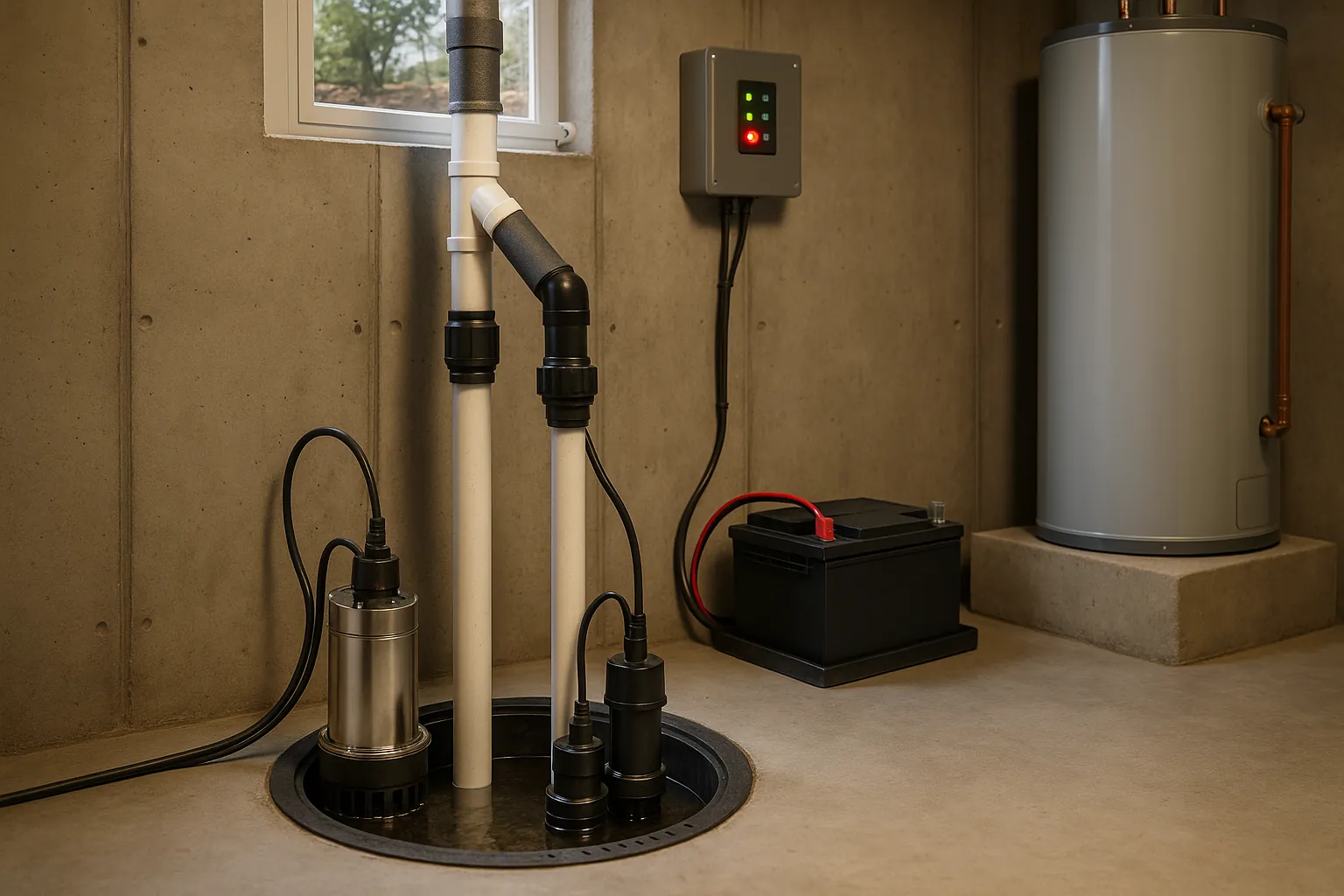
Think of it as a two-pump setup: your main AC-powered pump handles day-to-day water. The backup is a separate 12-volt DC pump mounted beside it in the same sump basin, connected to a deep-cycle battery and a smart controller. When power fails or the primary pump conks out, the backup senses high water and kicks on automatically. Most controllers also have alarms and status lights, and some can send a notification to your phone.
Battery backups aren't designed to run forever—they're built to keep you dry during typical outages, which in Indiana often last a few hours to overnight. For longer outages, a larger battery bank or a generator might be needed, but for most homeowners, a well-sized backup is enough.
Choosing the Right Battery
You've got a few options. Sealed AGM (absorbent glass mat) batteries are the most popular—no maintenance, no acid spills, and they hold up well to the occasional deep discharge. Flooded lead-acid batteries are cheaper but need you to check water levels every few months. Lithium iron phosphate (LiFePO4) batteries last longer and are lighter, but they're pricier and must work with a compatible controller.
Run-time depends on capacity (amp-hours), pump size, and how high the water has to be lifted. A typical 50-amp-hour AGM battery with a 1/3 HP backup pump might run for 5–8 hours of continuous pumping—longer if the pump cycles on and off. Your local specialist can calculate exactly what you need based on your pit size and head height.
Installation and Discharge Tips
Getting the installation right is half the battle. The pit should be big enough for both pumps and have a reliable float switch. Use a quality check valve on the discharge line to prevent backflow—that's a common source of short cycling. And route the discharge away from the foundation to a daylight outlet or an approved storm drain. In Indiana winters, that discharge line can freeze. Adding an air gap and insulating the exposed pipe helps keep it flowing when temps drop.
Maintenance Is Simple but Important
Once a quarter, pour a bucket of water into the pit to make sure the backup kicks on. Look for any debris that might block the float. Test the alarm. And replace the battery every 3–5 years—or sooner if it starts losing charge quickly. Controllers with Wi-Fi monitoring let you keep an eye on things from anywhere, which is nice when you're on vacation.
Don't Forget Your Water Heater (Yes, Related)
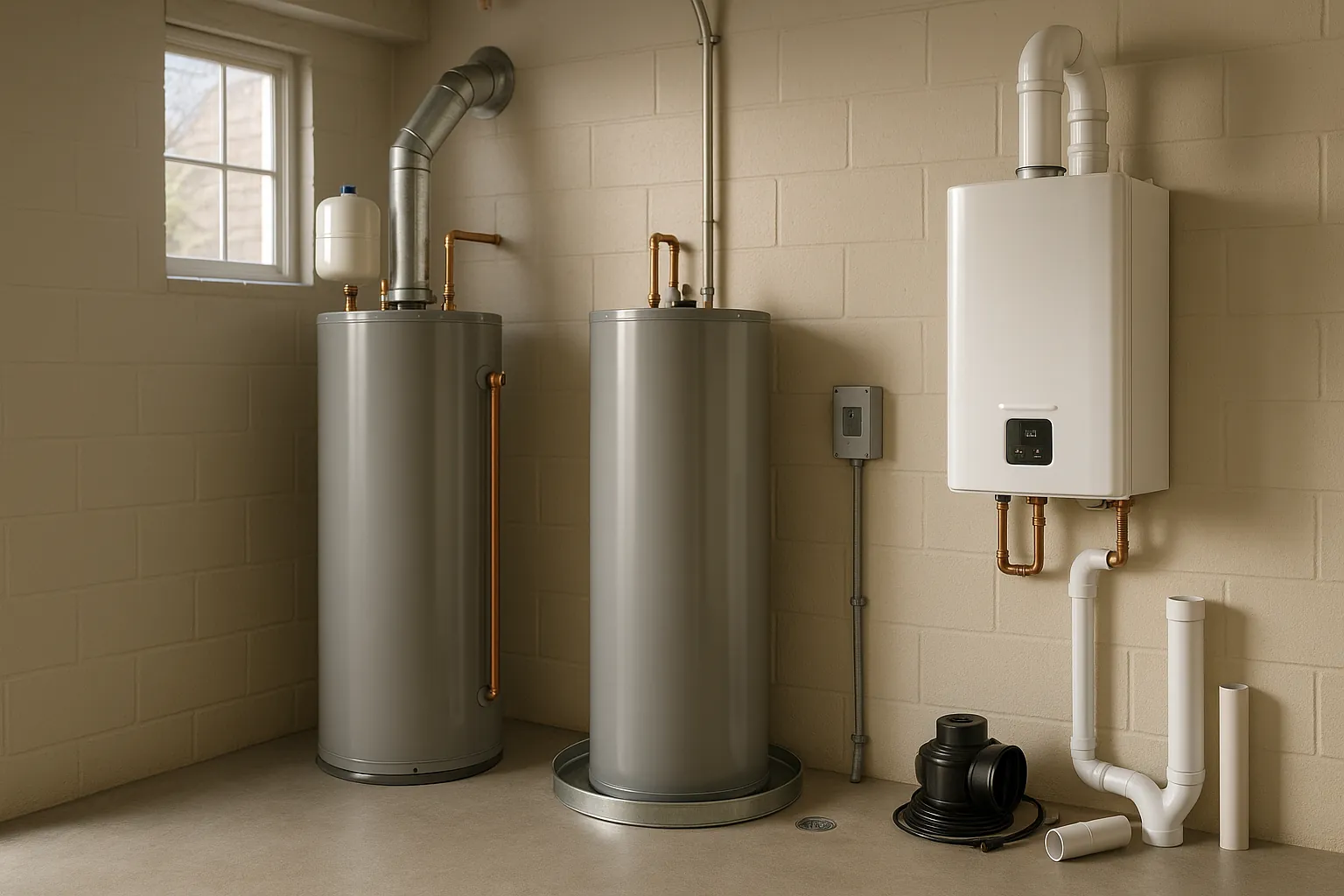
Believe it or not, your water heater plays into this. If your basement floods and your water heater gets submerged, you're looking at a costly replacement. And a hot water system running on gas or electric can malfunction after a flood. That's why many homeowners who upgrade their sump setup also check their water heater's condition and elevation. Powerhouse Plumbers can help you with both, and even install a system that monitors for leaks.
Service Area and Local Know-How
We work all over the metro, from Zionsville to Avon, Noblesville to Plainfield. Every neighborhood has its quirks—clay soil in some spots, sandy loam in others. We've seen sump pits that were way too small in 1960s homes and modern systems that weren't vented properly. We don't sell a one-size-fits-all system. We look at your lot, your drainage, and your home's specifics before we recommend a setup. And we always give you a clear written scope and price before any work starts.
The Takeaway
If you've got a basement or crawl space in Indianapolis, a battery backup sump pump is one of those things you hope you never need—but you'll be glad you have it when the power flickers during a downpour. Don't wait until after the storm. Get a no-pressure assessment from Powerhouse Plumbers. We'll walk through your options, talk about costs, and help you protect your home the right way.
Need a plumber you can count on?
Family-owned Indianapolis plumbers since 2005, up-front pricing, and free estimates with repair.