I remember getting a call from a friend in Fishers last winter. His water heater died on a Monday morning, and he had three kids waiting for showers. He said, "I just need hot water back, and I don't want to get ripped off." That’s the spot most homeowners find themselves in — stressed, cold, and trying to make a smart decision fast.
Here’s the thing: water heater replacement cost in Indianapolis varies a lot, but it doesn’t have to be a mystery. This guide walks you through real prices, what drives them, and how to get a fair deal — no fluff.
What Does Water Heater Replacement Cost in Indianapolis?
Typical installed costs in our area (2026):
- 40–50 gal gas atmospheric tank: $1,400–$2,600
- 50 gal electric tank: $1,200–$2,200
- Power/direct-vent gas tank: $2,000–$3,400
- High-efficiency condensing tank: $2,500–$4,200
- Condensing tankless: $3,500–$5,800
These are all-in numbers for a straightforward replacement in a basement with no surprises. But actual price depends on your home and choices.
What Drives the Price Up (or Down)
Tank Size and Fuel Type
Bigger tanks cost more. Gas units usually cost more upfront than electric, but they’re cheaper to run in Indiana because natural gas is inexpensive per BTU. If you’ve got a family of four, a 50-gallon gas tank is the sweet spot.
Venting Method
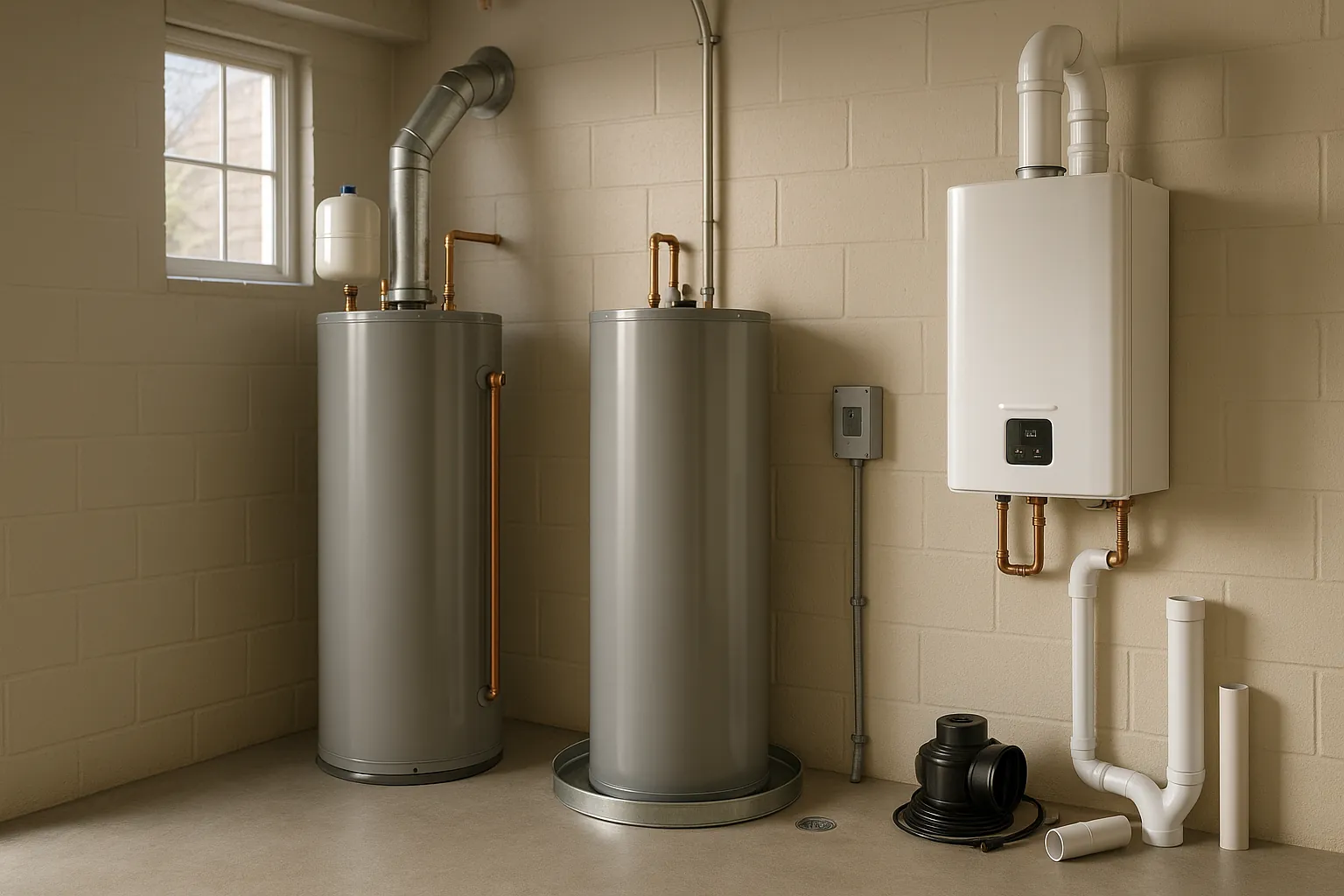
Atmospheric vents (the old metal pipe going up a chimney) are simple and cheap. But many homes in older neighborhoods like Broad Ripple or Meridian-Kessler have those tight utility closets that need power venting — that adds $300–$1,100 for the venting itself.
Location and Access
A basement with floor drain and open ceiling? Easy. A crawlspace in Brownsburg or a finished closet in Carmel? More labor, more cost. Tight spaces take longer, and time is money.
Permits and Code Items
Marion County requires a plumbing permit for water heater replacement (usually $40–$150). Many homes also need a thermal expansion tank ($125–$275), a drain pan tied to a floor drain ($100–$350), and updated shutoff valves. These aren't upcharges — they’re code. And code keeps your home safe.
Hard Water in Indianapolis
Our municipal water is very hard (200+ ppm). That means sediment builds up faster and the anode rod wears out quicker. If you don’t flush your water heater yearly, you’ll shorten its life. Some homeowners install a water softener or a powered anode rod to protect the new unit. It’s worth discussing with your plumber.
Gas vs Electric: Which Is Better Here?
For most Indianapolis homes, gas wins on operating cost. Natural gas is cheap. Electric resistance is expensive by comparison. But if you don’t have gas available, or you’re in an all-electric home, a modern heat pump water heater can be efficient — though they’re bigger and need more space.
Tank vs Tankless: The Tradeoffs
Tankless units cost more upfront but last longer (15–20 years vs 8–12 for a tank) and save energy. They also never run out of hot water — nice for families with back-to-back showers. But they need bigger gas lines and special venting, and cold winters here mean you need freeze protection for the condensate line. If you’re considering tankless, get a pro to evaluate your gas supply and venting options.
Add-Ons That Can Appear on Your Quote
- Permit/inspection: $40–$150
- Expansion tank: $125–$275
- Drain pan and drain line: $100–$350
- Venting upgrades: $300–$1,100
- Gas line adjustments: $250–$650
- Electrical circuit upgrades: $250–$1,200 (common when switching to electric or tankless)
- Haul-away/disposal: $50–$150 (often included)
Most quotes from reputable companies include haul-away and basic code items. Always ask what’s included.
Common Objections, Addressed
"Your quote is higher than a big-box installer." Big-box stores often use subcontractors who may not know local codes. We do this every day in Indy, Greenwood, and Zionsville. We know what inspectors look for.
"Can’t I DIY this?" You can, but permits, gas line sizing, venting, and code compliance are tricky. A mistake can mean carbon monoxide or a flood. Most homeowners find the peace of mind worth the cost.
"Will there be surprise add-ons?" A good plumber gives you a line-item quote before starting. If they find something unexpected, they’ll call you. At Powerhouse Plumbers, we believe in transparent pricing.
"How long without hot water?" Most like-for-like tank replacements take 2–6 hours. Tankless conversions might take 6–10. We’ll have you back in service the same day.
When to Replace Instead of Repair
If your water heater is over 10 years old, leaking, or has rust in the tank, it’s usually smarter to replace. Repairs on an old unit are throwing good money after bad. Also, if the pilot or thermostat keeps failing, consider replacement.
Timeline and Process
Call us, we schedule a site visit. We check your water quality, venting, gas line, and clearances. Then we give you a fixed quote. On install day, we show up, do the work, pull the permit, pass inspection, and clean up. Easy.
Why Local Matters
We know Indy winters. We know the inspectors in Fishers and Noblesville. We’ve seen the plumbing nightmares in old Irvington homes. When you hire a local plumber, you’re getting someone who knows the quirks of your neighborhood.
Ready for a Straightforward Quote?
If your water heater is acting up or you’re planning ahead, get a local quote here. We’ll walk through your options and give you a clear, line-item estimate — no pressure, just honest advice.
Frequently Asked Questions
How much does water heater replacement cost in Indianapolis? Installed costs range from $1,200 for a basic electric to $5,800 for a condensing tankless. Most gas tank replacements fall between $1,400 and $2,600.
Do I need a permit in Indianapolis? Yes, Marion County requires a plumbing permit for all water heater replacements. We handle that.
How long does a replacement take? Typically 2–6 hours for same-type replacement, same day.
Is tankless worth it here? If you have the gas capacity and budget, tankless offers longer life and lower energy bills. But it costs more upfront.
Do I need an expansion tank? If your home has a pressure-reducing valve or backflow preventer, then yes — code requires it.
What size water heater do I need? For a family of 3–5, a 50-gallon gas tank is standard. If you love long showers, consider a 55- or 60-gallon.
Will you haul away the old one? Yes, we include disposal in our quotes.
Any rebates available? Check with Citizens Energy Group and AES Indiana for current efficiency incentives. We can help you find them.
Looking for more tips? Visit our blog.
Need a plumber you can count on?
Family-owned Indianapolis plumbers since 2005, up-front pricing, and free estimates with repair.